Buying a Home After 50: A Guide for Women Who Know What They Want
by Tommye McCeig
There’s something different about buying a home when you’re over 50.
And no, I’m not talking about grab bars, single-story homes, or whether you can carry your laundry upstairs. Good grief.
I’m talking about the fact that by this point in life, you probably know yourself pretty well.
You know what you like. You know what you don’t like. You may have owned a home before and learned exactly which features sounded wonderful but drove you crazy once you actually lived with them.
And maybe, for the first time, you’re buying a home based largely on what you want.
That can be a pretty great place to be.
Start With What You Want Now
Your life at 50 or 60 probably doesn’t look exactly like it did at 30. Why should your home?
Maybe the kids are grown. Maybe you’re divorced and buying a home on your own. Maybe you’re relocating to North Texas for work or to be closer to family. Maybe you sold a larger house and have equity to put toward the next one.
Or maybe absolutely nothing dramatic happened.
Maybe you just want a different house.
That counts, too.
Before you start looking, think about what would make you happy to come home every day.
Maybe you want a really great kitchen.
Maybe you want a huge island, a fabulous primary bathroom, a home office with a door you can close, a pool, a three-car garage, a lock-and-leave townhome, room for the dog, or enough bedrooms that everybody can come visit without everybody staying forever.
There is no universal list of things women over 50 are supposed to want in a home.
Your list is the one that matters.
Your Money May Look Different Now, Too
One of the advantages some women have when buying later in life is simply having more financial options.
You may have equity in a current home. Your income may be higher than it was years ago. You may have investments or other assets. Or you may be buying on one income for the first time and want to be particularly thoughtful about the monthly payment.
Whatever your situation, don’t start with the number a lender says you can spend.
Start with the number you actually want to spend.
Those are not necessarily the same thing.
In North Texas, remember that the purchase price is only part of the monthly cost. Property taxes, homeowners insurance, HOA dues when applicable, utilities, and maintenance all matter.
A good lender can help you understand the financing side. I can help you look at the real estate side: what homes are selling for, how different areas compare, and what you’re actually getting for your money.
Then you decide what makes sense for you.
Think About How You Actually Live
This is where I think buyers sometimes get distracted.
It’s easy to walk into a beautiful model home and suddenly become convinced you need things you didn’t know existed 20 minutes earlier.
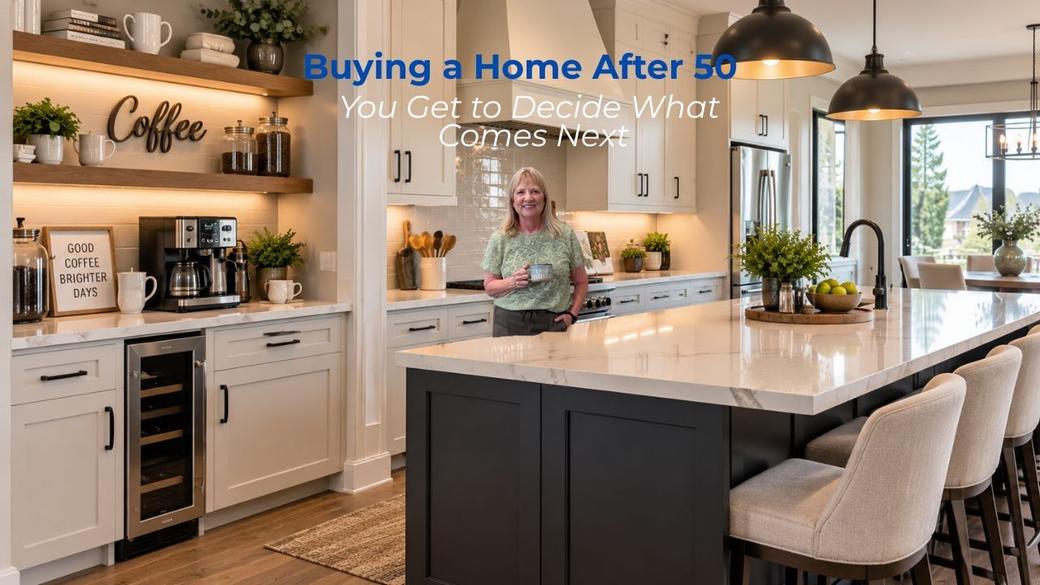
Ask me how many people have discovered they desperately need a coffee bar after seeing one in a model home. I may or may not be one of those people. 😂
Before the pretty stuff takes over, think about your real life.
Do you entertain? Work from home? Travel frequently? Want to be able to lock the door and leave without worrying about a huge yard? Love gardening and actually want the huge yard?
Do you want to walk to restaurants and coffee shops, or would you rather have more house and drive where you need to go?
Would you happily trade square footage for a better location?
There aren’t right answers.
But there are answers that are right for you.
North Texas Gives You a Lot of Choices
One thing about buying a home in Dallas-Fort Worth: there is no shortage of options.
You can find established neighborhoods with mature trees and homes that have been around for decades. You can find brand-new construction with the latest finishes and amenities. There are townhomes, condos, gated communities, master-planned developments, golf-course communities, and plenty of traditional neighborhoods.
And the experience can be completely different from one part of DFW to another.
That’s why I wouldn’t choose an area based solely on a list you found online.
Go there.
Drive around.
Have lunch. Get coffee. See how long it actually takes to get somewhere you go regularly. Visit at different times of day.
You aren’t just buying the house. You’re going to live there.
Don’t Automatically Assume Smaller Is Better
This one makes me a little crazy.
Turning 50 does not mean somebody shows up at your door and says, “Congratulations! It’s time to downsize.”
You may want less house. Plenty of people do.
But you may also want more.
Maybe you’ve spent years raising kids and compromising on space, and now you finally want the house you’ve always wanted. Maybe you want a guest suite because your adult children visit. Maybe you want separate offices. Maybe you want a media room, a pool, or that glorious kitchen.
Buy for the life you’re actually planning to live, not the life somebody thinks you’re supposed to want because of your age.
Look at the House With Your Head, Too
Now comes the part where I have to be the real estate broker and temporarily interrupt the fun. 😂
No matter how much you love a house, it still needs to make sense.
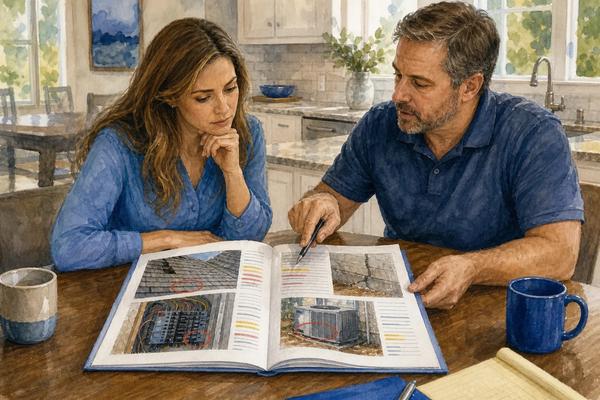
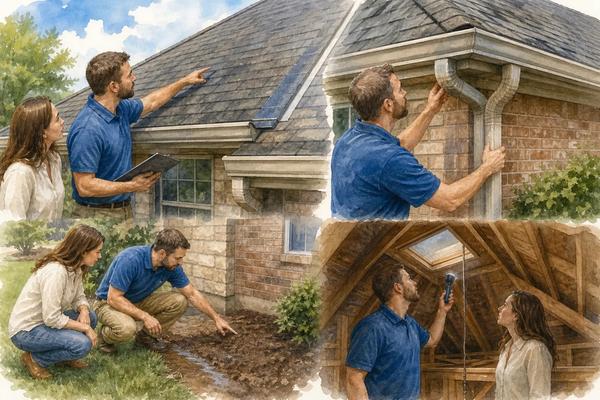
Pay attention to the condition of the roof, HVAC, plumbing, electrical systems, foundation, drainage, windows, and other major components. Get the appropriate inspections. Understand the property taxes. Get an insurance quote. Read the HOA documents if there is an association.
If you’re considering new construction, don’t assume new means perfect. I still recommend an independent inspection.
And you can always ask me questions. If something falls outside my area of expertise, I’ll help point you toward the right professional who can give you the answer you need.
Buying on Your Own? You’re Not the Only One
Some women over 50 are buying a home by themselves for the first time.
Others have bought and sold several homes and simply happen to be the only person making the decision this time.
Either way, you don’t need somebody else’s permission to know what matters to you.
You also don’t have to know everything about buying a house before you start. That’s why you hire people who know their part of the process (like me when you’re buying a house).
Ask questions. Take your time when you have time. Understand what you’re signing. And don’t let anyone make you feel as though you should want something you don’t.
It’s your money.
It’s your home.
It’s your decision.
So, What Should Women Over 50 Look for in a Home?
The same thing every smart buyer should look for: a home that fits their life, their finances, and what they want next.
The difference may be that you’ve had enough life experience by now to recognize those things a little faster.
You may know that you never use a formal dining room.
Or that you absolutely need a bathtub.
Or that you’re never mowing another giant yard as long as you live.
Or that you LOVE mowing the yard and would like everybody to quit trying to take it away from you. 😂
That’s the beauty of this stage.
You get to decide.
Frequently Asked Questions About Women Over 50 Buying a Home
Is buying a home after 50 a good idea?
Absolutely. Age is just a number. Whether buying makes sense has much more to do with your finances, your plans, and what you want from your next home.
Your income, debts, assets, monthly expenses, how long you expect to own the home, and the local market can all play a role. A lender and your financial or tax professionals can help you evaluate the pieces that fall within their areas of expertise.
Should I downsize after 50?
Only if you want to downsize.
A smaller home may mean less maintenance and lower expenses, but that’s not everybody’s goal. Your next home can be smaller, larger, newer, older, simpler, or completely fabulous.
The point is to choose intentionally.
Can a woman buy a house on one income?
Absolutely.
What you can comfortably purchase depends on your individual financial situation, including income, debts, credit, assets, interest rates, taxes, insurance, and other expenses.
A lender can help you determine what you qualify for. Then you decide what payment you’re comfortable carrying.
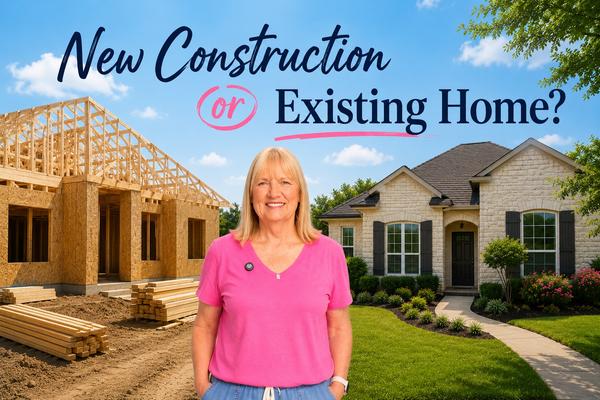
Should I buy new construction or an existing home?
Either can be a good choice.
New construction may offer newer systems, current finishes, builder incentives, and fewer immediate updates. Existing homes may offer established neighborhoods, mature landscaping, larger lots, or locations where new construction isn’t available.
Compare the whole package rather than assuming one is automatically better.
What should I consider when buying a home in North Texas?
Look beyond the house itself.
Consider property taxes, insurance, commute and travel patterns, HOA or special district costs when applicable, the surrounding area, and the condition of the property.
And actually spend some time in the areas you’re considering. DFW is far too big to choose a location based on a map.
The Bottom Line
Buying a home after 50 isn’t about preparing to get old.
It’s about deciding how you want to live now and what you want next.
Maybe that’s a smaller home with less maintenance. Maybe it’s closer to family. Maybe it’s brand-new, or maybe it’s an older home with character, mature trees, and a backyard you love.
Whatever your next home looks like, it should fit you and the life you want to live.
If you’re thinking about making a move in North Texas, give me a call at 214-842-6001.
Categories
Recent Posts