Home Inspection Checklist for Buyers
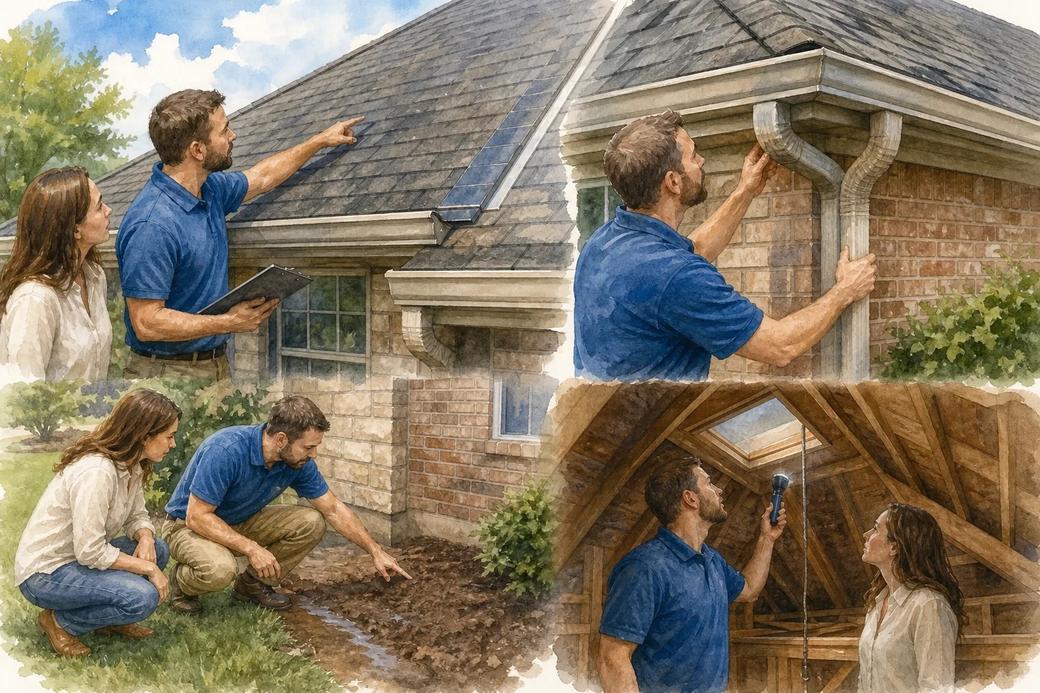
There’s no such thing as a perfect house. Even a brand-new home is going to have things that show up on an inspection. The purpose of a home inspection isn’t to find a house with nothing wrong with it. It’s to understand what you’re buying, identify the things that really matter, and get more information when we need it.
In North Texas, I pay particular attention to the big things: foundation, plumbing, HVAC, roof, and electrical. But every buyer has a different comfort level. Something that really concerns one buyer may be something another buyer is perfectly comfortable taking on. My job is to help you understand what we know, bring in the right professionals when we need more information, and help you decide what works for you.
Table of Contents
- Step 1: Understand the Inspection and Your Timeline
- Step 2: Pay attention to the Roof, Foundation, Attic and Drainage
- Step 3: Check Plumbing, Electrical, HVAC, and Appliances
- Step 4: Look at the Interior and Safety Items
- Step 5: Get the Right Specialists Involved
- Home Inspection Checklist for Buyers FAQ
- Conclusion
Step 1: Understand the Inspection and Your Timeline
Your inspection happens during a very important part of the Texas contract: the option period. We need to schedule the inspection early enough that we have time to review the report and, if necessary, bring in other professionals before that deadline.
A general home inspector is exactly that: a generalist. They're looking at the overall condition of the home and identifying things that may need additional attention. If something comes up that needs a closer look, we may bring in the appropriate professional, such as an HVAC technician, electrician, plumber, roofer, foundation professional, or contractor.
I also recommend a sewer scope so we can see what's happening in the sewer line, and I like to have a foundation professional take a look at the foundation. Those are two areas where I'd rather have more information while we still have time to make decisions.
I recommend that my buyers attend the last 30 minutes of the inspection. That's when the inspector can walk us through the major findings, show us what they're seeing, and answer questions. Reading something later in a report isn't always the same as standing there and having the inspector explain it to you.
And remember, the inspection report is information. We don't have to react to every item the same way. First, we need to understand what we've found.
Key Takeaway: Schedule the inspection early in your option period and leave enough time to get additional professional opinions if we need them.
Step 2: Pay Attention to the Roof, Foundation, Attic, and Drainage
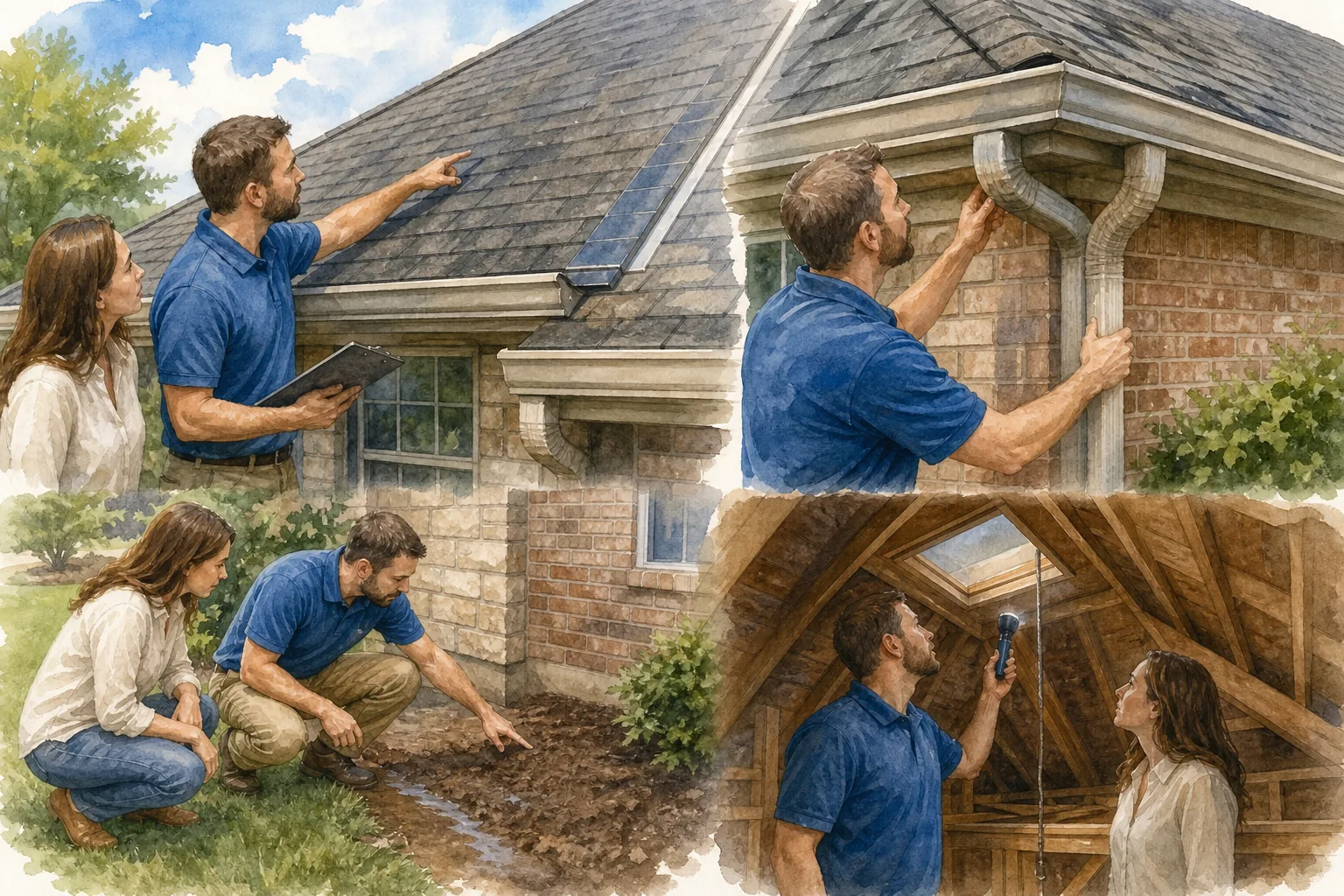
In North Texas, the roof and foundation are two of the big things I want us paying attention to. Our weather and soil can both be hard on houses, so these are areas where we want good information.
The inspector will look for signs of drainage problems around the foundation, cracks, uneven areas, sticking doors, or other things that could indicate movement. Not every crack means there's a foundation problem, but if something needs a closer look, that's when we get a foundation professional involved.
The roof deserves the same attention. Hail and Texas weather can do a number on a roof, and damage isn't always obvious from the ground. We'll want to know the approximate age of the roof, whether there have been previous repairs or insurance claims, and whether the inspector sees anything that needs further evaluation by a roofer.
The attic can tell us quite a bit too. The inspector will look for things like signs of water intrusion, ventilation issues, insulation concerns, damaged framing, or evidence of pests.
Drainage matters because water needs somewhere to go. Standing water near the foundation, improper grading, or drainage issues may be something we need to investigate further.
The important thing is that we don't diagnose these things ourselves. The inspector identifies concerns, and when something needs more evaluation, we bring in the appropriate professional and get more information.
Key Takeaway: In North Texas, pay particular attention to the roof, foundation, attic, and drainage, and get a specialist involved when something needs a closer look.
Step 3: Check Plumbing, Electrical, HVAC, and Appliances
Plumbing, electrical, and HVAC are three more of the big systems I want us paying close attention to during an inspection. Problems in these areas can get expensive, so this isn't where we want to guess.
The inspector will check visible plumbing, fixtures, water flow, drains, toilets, the water heater, and signs of leaks or previous water damage. This is also one reason I recommend having a sewer scope done. A general inspection can't tell us everything that's happening inside the sewer line.
For electrical, the inspector will look at the electrical panel, visible wiring, outlets, grounding, GFCI protection where applicable, and other signs of potential safety concerns. If something significant shows up, we'll bring in a licensed electrician to take a closer look.
HVAC is especially important in North Texas because our systems work hard. The inspector will look at the condition and operation of the heating and cooling systems, but age matters too. A system can be working on inspection day and still be something you'll want to budget for down the road.
The inspector will also test the built-in appliances that convey with the home. We're looking for whether they're operating properly and whether there are signs of leaks or other issues around them.
Again, the inspector doesn't have to give us every answer. If something raises a concern, we bring in the appropriate professional and get the information we need before deciding what to do.
Key Takeaway: Plumbing, electrical, and HVAC are major systems. Understand their condition and don't hesitate to get a specialist's opinion when the inspection gives us a reason to dig deeper.
Step 4: Review Interior Conditions and Safety Concerns
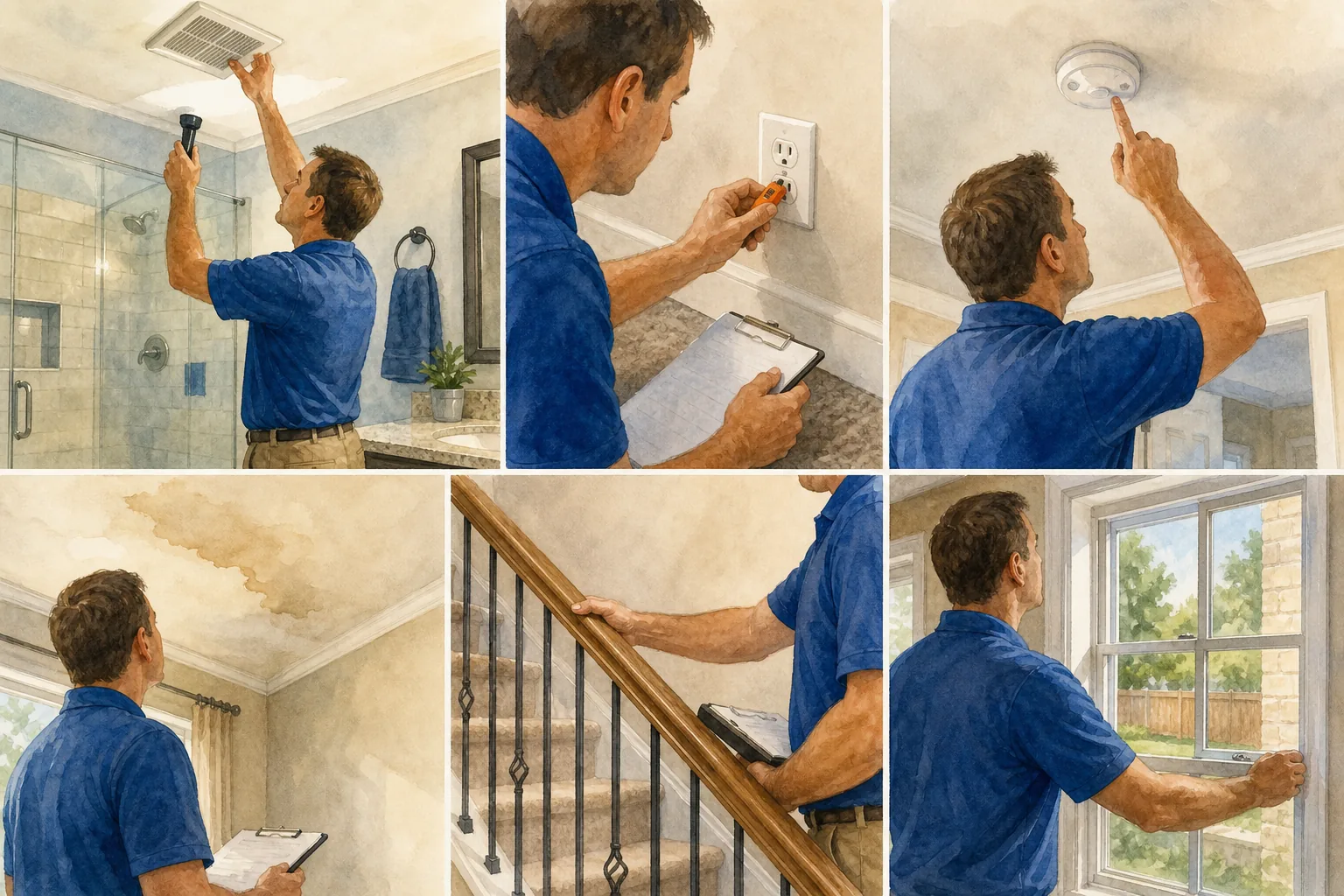
Inside the house, the inspector is looking at more than cosmetic things. They'll check walls, ceilings, floors, doors, windows, bathrooms, stairs, railings, smoke alarms, and other visible areas for signs of problems.
Water is a big one. Stains, bubbling paint, soft flooring, or signs of previous repairs can tell us that something deserves a closer look. The inspector will also look for cracks, uneven floors, or doors and windows that aren't operating properly. One little crack may be nothing more than normal movement, but several things showing up together may give us a reason to investigate further.
Bathrooms and other wet areas deserve particular attention because moisture can cause problems beyond the place where it started.
Safety issues matter too. The inspector will identify things like electrical concerns, missing or improperly installed safety devices, loose railings, or other conditions that may need attention.
And this is where it's important not to get overwhelmed by the inspection report. A house can have a long list of little things and still be a perfectly reasonable house to buy. We're going to pay more attention to the significant issues than a bunch of cosmetic items.
Remember, every buyer has a different threshold. Something you don't want to deal with may not bother another buyer at all. My job is to help you understand what we're looking at and get more information when we need it.
Key Takeaway: Don't let a long inspection report scare you. Focus first on the items that could affect safety, major systems, or the condition of the home.
Step 5: Get the Right Specialists Involved
A general home inspection gives us a good overall picture of the house, but it doesn't always give us every answer we need.
There are some additional inspections I routinely recommend. I recommend a sewer scope, and I like to have a foundation professional take a look at the foundation. If the home has a pool, I recommend a separate pool inspection, and I also recommend a termite/WDI inspection.
Beyond that, the general inspection helps guide us. If the inspector finds something that needs a closer look, we bring in the appropriate professional. That could be an HVAC technician, plumber, electrician, roofer, contractor, structural engineer, or another specialist depending on what we found.
The goal isn't to collect as many inspections as possible. It's to get enough reliable information for you to understand what you're buying.
Once we have that information, we'll look at the bigger picture. What needs immediate attention? What may become an expense down the road? What is routine maintenance or cosmetic? And most importantly, what matters to you?
There's no perfect house, and every buyer has a different threshold. You may be completely comfortable taking on something another buyer wouldn't want to deal with.
Then we'll look at your options under the contract and decide how you want to move forward. Depending on the situation and the contract, that could include asking the seller to make repairs, negotiating other terms, accepting something as-is, or deciding the house isn't the right one for you.
My role is to help you understand the information, bring in the appropriate professionals when we need them, and help you evaluate your options. The decision is ultimately yours.
Key Takeaway: Use the inspection and any specialist evaluations to understand what you're buying and decide what you're comfortable taking on.
Home Inspection Checklist for Buyers FAQ
What does a home inspection include?
A general home inspection looks at the overall condition of the home, including the roof, foundation, plumbing, electrical, HVAC, interior, exterior, attic, appliances, and visible safety concerns. Depending on the property, additional inspections or specialists may also be needed.
Should buyers attend the home inspection?
I recommend that my buyers attend the last 30 minutes of the inspection. That's when the inspector can walk us through the major findings, show us what they're seeing, and answer questions before we receive the full written report.
What should I pay the most attention to on a home inspection in Texas?
I pay particular attention to the foundation, plumbing, HVAC, roof, and electrical systems. Those can be some of the bigger-ticket items, but every house and every buyer is different. If something needs further evaluation, we'll bring in the appropriate professional.
Can buyers negotiate after a home inspection in Texas?
Depending on the contract and where we are in the option period, there may be several options after the inspection. We might request repairs, negotiate other terms, accept the property as-is, or decide not to move forward.
What makes sense depends on what we found, the contract, and what you're comfortable taking on.
Conclusion
My job is to help you understand what we've found, explain your options, and keep us on top of the deadlines while you decide what makes sense for you.
If you're buying a home in Dallas-Fort Worth and want someone helping you through the inspection process and everything that comes before and after it, contact Tommye McCeig. Let's get a plan together before you start looking at homes.
Categories
Recent Posts