Questions to Ask a Home Builder Before You Sign

Touring a model home is the fun part, but there’s a lot more to buying new construction than choosing a floor plan and finishes. Builder contracts, warranties, upgrade costs and construction timelines can vary quite a bit, so knowing what to ask before you sign matters. The builder’s sales representative works for the builder, which is why it’s important to have your own real estate agent involved before your first visit or conversation with the builder’s sales representative. Some builders have specific requirements about when your agent must be identified or present, so waiting until after that first contact can create problems with representation.
Table of Contents
- Questions About the Builder's Experience and Process
- Questions About the Lot, Floor Plan, and Included Features
- Questions About Pricing, Allowances, and Contract Terms
- Questions About the Construction Timeline and Inspections
- Questions About Warranties, Repairs, and Your Support Team
- FAQ
- Conclusion
Questions About the Builder's Experience and Process
Begin by probing the builder’s track record and daily workflow. Experience in one subdivision doesn’t guarantee smooth sailing on your specific lot, design, or home style.
- How long have you built homes in North Texas?
- How many homes like this one have you completed?
- Can I see completed homes or speak with recent buyers?
- Who will manage my build after I sign?
- How often will I receive updates?
- Which work is done by your own team, and which work goes to trade contractors?
- How do you check contractor licenses, insurance, and past work?
- Who handles permits and schedules inspections?
Ask the builder to name the person who will step in when a trade contractor misses a deadline or delivers sub‑par work. The answer should identify a specific role, not just a vague “someone will handle it.”
Material sourcing is another critical topic. Changes in product availability can shift both cost and schedule. Find out how substitutions are approved, whether you’ll be notified first, and if a replacement must match the original quality.
The subcontractor discussion should lead to written proof of insurance and a transparent chain of responsibility. Never rely on a verbal promise to cover every trade on site.
Having Tommye McCeig involved from the beginning means you have someone on your side who knows what questions to ask, what to watch for, and how the builder’s offer compares with other options in the market. She can also connect you with a lender early so you understand your financing before making decisions about upgrades and other costs.
Questions About the Lot, Floor Plan, and Included Features
The lot conversation belongs before any paint‑color talk. Drainage, foundation needs, utility connections, driveway placement, and the ultimate price all stem from the land.
Request a detailed site plan that marks the home footprint, easements, setbacks, drainage paths, utility lines, retaining walls, and any slope considerations. In North Texas, soil and water movement are especially important—ask which soil report guided the foundation design.
Next, line‑up the plan on paper with the model home. Models often showcase upgrades that aren’t part of the base price. Secure a written list of standard features that identifies brand and grade when those details affect performance or future replacement cost.
| Ask about | Why the answer matters | What to document |
| Lot and drainage | Site work may change the budget or yard layout. | Site plan, grading plan, and buyer responsibilities |
| Foundation design | Soil conditions can affect engineering and timing. | Foundation type and report used for design |
| Base features | Model home upgrades can hide the true starting scope. | Feature sheet with brand and grade details |
| Electrical and data | Later wiring can mean opening finished walls. | Outlet, conduit, network, and smart‑home locations |
| Exterior work | Fences, sod, trees, and irrigation may be excluded. | Landscape scope, completion date, and maintenance duties |
Smart‑home wiring deserves its own deep dive. Clarify what’s installed, what requires a subscription, and who retains the account after closing. If the builder offers a standard package, compare each device with the model home’s equipment. Tommye McCeig’s guide to a builder’s smart‑home package outlines the details buyers should verify before closing.
Drainage questions are vital: Where do downspouts discharge? Will grading be altered after landscaping? Who is responsible for fixing drainage issues that arise from later yard work? Builders may cover construction defects but exclude problems caused by owner modifications.
When comparing neighborhoods, Tommye McCeig can review the available new construction homes in DFW and help you separate advertised perks from the actual contract scope.
Questions About Pricing, Allowances, and Contract Terms
Pricing inquiries should yield concrete documents—not vague estimates from memory. Request the base price, lot premium, included features, and every allowance in writing.
- What does the base price include?
- Which items are allowances rather than fixed prices?
- What happens if the final selection costs more than the allowance?
- When can selections change, and what fee applies?
- How are change orders priced and approved?
- Can the builder raise the price after signing?
- Who pays for permit fees, utility connections, surveys, and site work?
- What happens to the earnest money if the project does not proceed?
An allowance is a budget placeholder. For example, a contract might set aside a specific amount for flooring without naming the exact product. If your chosen flooring exceeds the allowance, you cover the difference. Verify whether the allowance includes labor, delivery, tax, and installation.
Change orders require close scrutiny. Ask whether a requested change will shift the completion date, when payment is due, and that a signed change order must spell out the new price, the work affected, and any schedule impact.
Review cancellation language with a Texas real‑estate or construction attorney if the clause is unclear. Texas law can affect construction claims and contract remedies, but this article is not legal advice. Use the linked construction lien information as a starting point only.
Financing should also be addressed. Ask if the builder offers construction financing, works with a preferred lender, or accepts outside lenders. Preferred lenders may have promotions, yet you still need to compare the total loan cost and terms. Having Tommye McCeig present ensures you gather all financing questions early and keep them organized before any contract deadline.
Key Takeaway: Never treat an allowance, upgrade sheet, or verbal promise as part of the deal until it appears in the signed documents.
Before you sign, ask what happens if the appraisal comes in lower than the contract price and who bears any increase in site costs. These uncomfortable questions are far easier to resolve when asked early—ideally with Tommye McCeig in the room.
Questions About the Construction Timeline and Inspections
Demand more than a “move‑in by” date. Timing questions should uncover the milestones behind that date and the builder’s plan for inevitable delays.
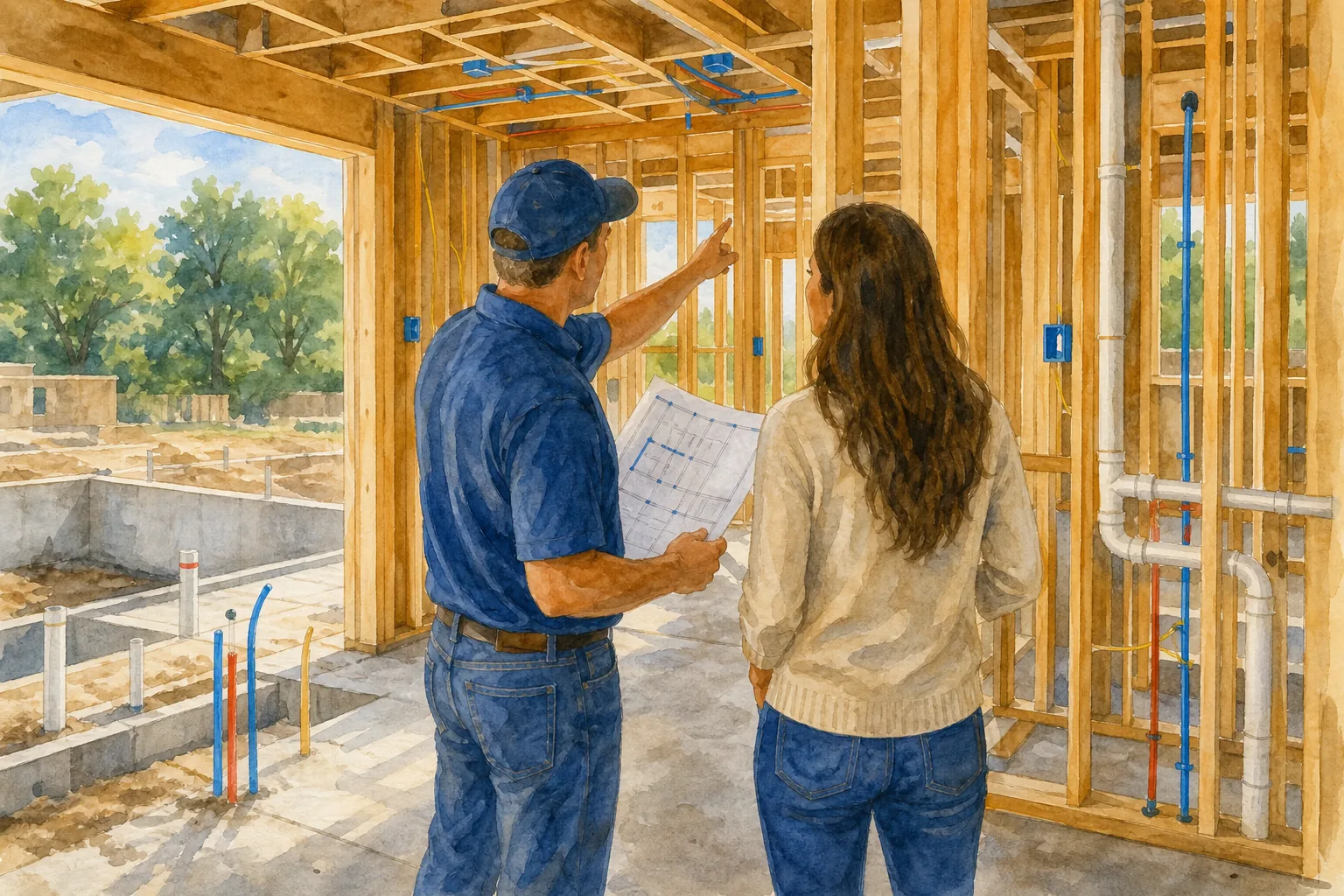
Request a schedule that outlines major phases: foundation, framing, rough plumbing, rough electrical, insulation, drywall, cabinets, and final finish. Then ask which events could shift the timeline.
Walkthrough questions by stage
- Before the foundation: Has the site been checked against the survey and grading plan?
- After framing: Can the buyer review room sizes, window locations, and door swings before walls close?
- During rough‑in: Are plumbing lines, electrical runs, and data locations placed according to the plan?
- Before insulation: Can the buyer attend a pre‑drywall walkthrough?
- At the final walkthrough: Who records the punch list, and when must repairs be reported?
Clarify who schedules independent inspections. Municipal inspections verify code compliance; they don’t replace a private inspection that focuses on workmanship. Confirm the contract allows an independent inspector and states when inspections may occur.
Ask how the builder handles delays caused by weather, labor shortages, material shortages, or design changes. Does the contract provide a revised completion date? Can you cancel? Are temporary housing costs covered? The written answer controls the outcome, so read the delay clause carefully.
During the final walkthrough, test every faucet, light, door, window, floor, wall, appliance, outlet, and HVAC system. Photograph each punch‑list item, request a copy of the list, and note the repair deadline.
Reviewing documents and loan details before closing is crucial. Construction timing can affect loan locks, rates, moving plans, and the sale of an existing home, so keep your lender in the loop as the schedule evolves.
 Questions About Warranties, Repairs, and Your Support Team
Warranty inquiries must zero in on the written terms. The familiar “1‑2‑10” label is a marketing shorthand, not a legal standard; each builder’s warranty dictates the actual coverage.
- Who provides the warranty?
- What does the first year cover?
- Are major systems covered for a separate period?
- What counts as a structural defect?
- Which issues are excluded?
- How must a claim be submitted?
- How long does the builder have to inspect or respond?
- Can the warranty transfer to a future buyer?
Ask for concrete examples. Does the warranty cover a leaking window? What about a cracked tile, a failed HVAC component, or a drainage problem? Answers often hinge on whether the defect is cosmetic, structural, caused by normal wear, or tied to a post‑closing change.
Identify the maintenance tasks the homeowner must perform. HVAC filter changes, grading adjustments, landscaping, and storm damage may fall outside coverage. Keep all receipts, inspection reports, photos, and written notices together.
Determine who handles repairs after closing. Is there a warranty administrator? Does the builder assign a service coordinator? Will a trade contractor return to the home? Knowing who protects finished surfaces and who cleans up after invasive work is vital.
Texas construction claims involve strict notice rules and a right for the builder to inspect or offer repairs before a lawsuit. Some warranties also require mediation or arbitration. Complex disputes merit consultation with a qualified Texas attorney before any deadline passes.
Having Tommye McCeig on your side gives you someone to help you know what to expect throughout the process, from builder questions and inspections to the final walkthrough. And when something calls for specialized advice, she can help you know when it’s time to bring in the right professional, whether that’s an inspector, lender, or attorney.
Pro Tip: Save the signed contract, upgrade sheets, plans, inspection reports, warranties, photos, and repair emails in one digital folder before closing.
FAQ
What should I ask a home builder before signing?
Probe the builder’s local experience, contract price, allowances, change‑order process, delay policies, inspection rights, and warranty limits. Also confirm who manages the project and which trade contractors will work on your home. Insist the builder puts each important answer in writing—verbal promises rarely protect you if the contract says something different.
How do I compare two home builders?
Use the same set of questions for each builder. Review completed projects, references, base features, site‑work costs, allowance rules, schedule terms, inspection access, and warranty procedures. Focus on the written scope rather than the model home’s finishes. Tommye McCeig can help you compare the documents without making the decision for you.
Should I hire an independent inspector for new construction?
Yes. An independent inspector can evaluate the home at agreed construction stages and before closing. Ask the builder when inspections are allowed and whether the inspector needs site approval. A city inspection checks code compliance; a private inspector can uncover workmanship concerns. Keep the inspection report and route repair requests through the required process.
What is an allowance in a new home contract?
An allowance is a budgeted amount for an item that hasn’t been selected or fixed in the contract. Flooring, lighting, appliances, and fixtures often use allowances. Ask what the amount includes and who pays the difference if your selection exceeds it. Confirm whether labor, delivery, tax, and installation are covered.
Can a home builder change the contract price?
A builder may have contractual rights to adjust certain costs, but the exact answer depends on the signed agreement. Ask about material substitutions, site conditions, permit fees, upgrade changes, and appraisal gaps before signing. Have a Texas attorney review any ambiguous terms. Don’t rely on a sales conversation to limit a written price‑adjustment clause.
Conclusion
Before you sign anything, make sure you understand what’s included, what isn’t, and what happens next. New construction has a lot of moving pieces, and having your own real estate agent involved from the beginning can make the process much easier to navigate.
If you’re thinking about new construction in North Texas, let’s talk before you visit the builder or contact the sales office. We can go over what you’re looking for, what questions to ask, and what you’ll want to know before you walk through that model home door. Schedule a call with Tommye McCeig today.
Categories
Recent Posts