Best Home Loan Low Credit Score Options
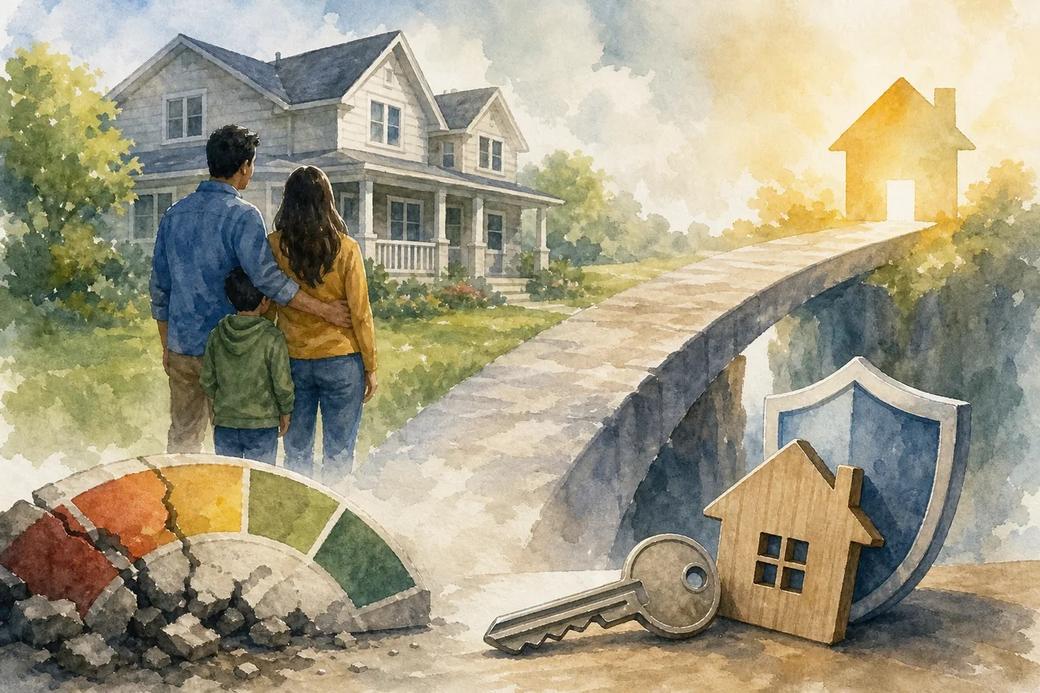
A low credit score doesn't always end the home-buying plan. FHA programs may accept scores in the 500s, while eligible VA borrowers may qualify with no down payment and no mortgage insurance. Here are five paths to discuss with a lender, plus the questions that can save you money.
Table of Contents
- Start with the Right Lender
- FHA 203(b) Loan: A Standard Primary-Residence Option
- FHA 203(k) Loan: Purchase and Renovation Financing Together
- FHA One-Time Close Loan: Construction Financing for Eligible Buyers
- VA Home Loans Texas: A No-Down-Payment Option for Eligible Borrowers
- Home Loan Low Credit Score Comparison Table
- FAQ About Home Loans With a Low Credit Score
- Conclusion
1. Start With the Right Lender
A lower credit score doesn't necessarily mean homeownership is off the table. Different loan programs have different requirements, and lenders may also have their own credit-score guidelines.
That's why the first step isn't touring homes. It's talking with a lender who can look at your complete financial picture and explain what options may be available to you.
If credit is an issue, don't assume you need to wait until everything is perfect before asking questions. I can connect you with lenders who can review your situation, explain your options and help you understand what steps may make sense next.
Once you know what financing may work, we can make sure the homes we're looking at fit those requirements too.
2. FHA 203(b) Loan: A Standard Primary-Residence Option
The FHA 203(b) loan is the standard FHA mortgage for buying or refinancing a principal residence. It is often the first home loan low credit score borrowers discuss because FHA rules can allow a score from 500 to 579 with 10% down.
With a score of 580 or higher, the research reviewed for this article lists a down payment as low as 3.5%. The lender still reviews income, debts, assets, occupancy, and the property. A lender may also set a higher minimum than the FHA baseline. That is called an overlay.
The Federal Housing Administration doesn't fund the mortgage itself. A bank or mortgage company funds the loan, while HUD provides the insurance. The program provides mortgage insurance for a principal residence through an approved lending institution. Learn more about HUD's 203(b) program.
Mortgage insurance is a key cost. FHA loans require it. The amount and duration depend on the loan structure, down payment, and other terms. Ask the lender to show the upfront charge, the monthly amount, and the conditions for ending or replacing the insurance.
This option fits a buyer who wants a primary residence and has enough cash for the required down payment and closing costs. It may also help when a conventional lender's score rules are too high. The trade-off is that the lower entry bar can bring a higher long-term cost.
Before making an offer, ask whether the home's condition could cause an FHA appraisal issue. Peeling paint, damaged roofing, or missing safety features can delay closing until repairs are addressed. The loan decision is only half of the review.
3. FHA 203(k) Loan: Purchase and Renovation Financing Together
The FHA 203(k) loan combines a home purchase with eligible renovation financing. For a home loan low credit score borrower, it may fit when the right property needs work before it becomes suitable for occupancy.
The same FHA score pattern applies in the research data. Scores from 500 to 579 are paired with 10% down. A score of 580 or higher may qualify for 3.5% down, subject to lender approval and program rules. Mortgage insurance is required.
Here's the part buyers often miss. A renovation loan adds more moving pieces than a standard purchase. The lender may need a repair plan, contractor information, cost estimates, inspections, and a timeline. The home must also meet the program's property rules.
Imagine a buyer finds an older DFW home with a price that fits the budget, but the roof needs work. The buyer cannot assume the repair will be simple after closing. The lender must first confirm that the planned work, cost, and contractor fit the loan terms. The appraisal may also consider the home's value after the improvements.
Ask these questions before choosing this path:
- Which repairs qualify under the lender's version of the program?
- How much cash is needed before work starts?
- Who checks the work during the project?
- What happens if the contractor misses the schedule?
- Can the buyer live in the home during repairs?
The 203(k) route can solve a condition problem, but it won't remove the need for careful property review. A buyer should inspect the home before relying on a renovation budget. Estimates change. Hidden damage has a way of appearing after walls open.
Use this option when the repairs are central to the purchase decision. If the home is already in acceptable condition, a standard FHA loan may involve fewer steps.
4. FHA One-Time Close Loan: Construction Financing for Eligible Buyers
The FHA One-Time Close loan is a construction financing option for eligible buyers who want to build a primary residence. It can be relevant to a low credit mortgage search, but its score threshold in the supplied data is higher than the standard FHA range.
The research lists a minimum score of 580 and 10% down for this product. Mortgage insurance is required. The borrower must occupy the home as a primary residence, and the lender must approve the construction plan and related parties.
Construction loans bring risks that don't show up in a normal purchase. The buyer must understand the builder agreement, draw schedule, inspection process, completion deadline, and treatment of change orders. A small design change can affect the budget. A delayed material can affect the closing date.
Credit repair should happen before the application, not during the build. A lender may check credit again before the loan closes. New debt for furniture, a vehicle, or other costs can change the approval picture.
This loan may suit a buyer who needs new construction and has a score near or above the stated threshold. It is less suited to someone who wants the fewest parties and the simplest closing. Buyers should request the complete cost breakdown before signing a builder contract.
One more point: the 580 figure is a product guideline from the supplied research, not a promise of approval. Lenders can apply their own rules. Ask which credit score model they use and whether they have overlays for construction lending.
5. VA Home Loans Texas: A No-Down-Payment Option for Eligible Borrowers
VA Home Loans Texas may be the most cost-sensitive path for an eligible veteran or service member with a low score. The supplied research lists zero down, no mortgage insurance, and a minimum credit score of 550 for this option.
That does not mean every applicant with a 550 score will qualify. The lender still reviews income, debt, credit history, occupancy, and property requirements. Eligibility also depends on military service or another qualifying status. The score threshold can vary by lender. One source lists 550, while another lists 580.
More information is available through this VA home loan eligibility resource.
A buyer can request a Certificate of Eligibility online. A lender may also submit the request. Service history is only one part of the process, but it is the part that determines whether this program is available at all.
The zero-down feature can protect cash at closing. The lack of monthly mortgage insurance can also change the payment comparison. Still, zero down doesn't mean zero cash needed. Buyers may still face closing costs, prepaid expenses, a funding fee, inspections, or other charges depending on the loan.
Ask at least two lenders about the same scenario. Request the rate, lender fees, estimated payment, funding fee treatment, and cash needed to close in writing. The research found only one disclosed rate figure among the products reviewed, 5.75% for a Texas VA loan. Treat that as a reference point, not a promise or market norm.
If Tommye McCeig is helping with the home search, she can help prospective buyers find a lender who understands VA eligibility and low-score files. She can also help keep the property search aligned with the lender's requirements. That early coordination matters when the buyer has little room for a failed contract.
Home Loan Low Credit Score Comparison Table
These options differ most in score rules, cash needs, insurance, and the type of home they support. The table gives a starting point, not a loan approval. Lender overlays can change the result.
| Option | Score shown in research | Down payment shown | Mortgage insurance | Fits when |
|---|---|---|---|---|
| FHA 203(b) | 500 minimum; 580 for lower down payment | 10% at 500 to 579; 3.5% at 580+ | Yes | Primary-residence purchase |
| FHA 203(k) | 500 minimum; 580 for lower down payment | 10% at 500 to 579; 3.5% at 580+ | Yes | Purchase with eligible renovations |
| FHA One-Time Close | 580 | 10% | Yes | Eligible primary-residence construction |
| VA Home Loans Texas | 550 shown; lender rules vary | 0% | No | Eligible Texas veterans or service members |
The cost difference deserves close attention. FHA can make entry easier, but insurance adds to the payment. VA may reduce cash needed at closing and avoids mortgage insurance, but only eligible borrowers can use it. Buyers should compare the full loan estimate rather than focusing on the advertised down payment.
For buyers still building their budget, Tommye's mortgage information and home loan guide can help frame the lender conversation. It should not replace a lender's written quote.
FAQ About Home Loans With a Low Credit Score
Can I get a home loan with a 500 credit score?
Yes, an FHA loan may accept a 500 credit score with a 10% down payment. Approval still depends on income, debt, payment history, assets, occupancy, and the lender's own rules. A lender may require a higher score than the FHA baseline. Ask for the minimum score and full cash-to-close estimate before shopping.
What is the lowest credit score for an FHA loan?
The research lists 500 as the lowest FHA score, with 10% down for scores from 500 to 579. A score of 580 or higher may allow 3.5% down. Mortgage insurance is required. These are general program thresholds, so the lender's overlays and the borrower's full file still control the decision.
Can a veteran get a VA loan with bad credit?
Yes, a veteran may qualify for a VA loan with a low score, but the exact threshold varies by lender. The supplied sources list scores as low as 550 and as high as 580. VA eligibility also requires qualifying service and a Certificate of Eligibility. Income, debt, occupancy, and property rules still apply.
Do FHA loans require mortgage insurance?
Yes, FHA loans require mortgage insurance. The upfront and ongoing costs depend on the loan terms and down payment. Buyers should ask the lender how much the insurance adds each month and how long it applies. A lower down payment can make buying easier, but it can also increase the total borrowing cost.
Should I wait until my credit score improves before buying?
Maybe. Waiting can help if a score increase would lower the down payment or improve the rate, but the right choice depends on the full budget. Review the credit report for errors first. Then ask a lender to compare today's possible payment with a future scenario. Tommye McCeig can help buyers find a lender for that discussion.
Conclusion
Don't Let a Credit Score Stop the Conversation
If your credit isn't where you'd like it to be, don't automatically assume buying a home isn't possible. The right first step is finding out where you actually stand.
There may be loan options available now, or there may be a few things worth working on first. Either way, having good information gives you a plan.
If you're thinking about buying a home in Dallas-Fort Worth and credit is one of your concerns, contact Tommye McCeig. I can connect you with lenders who can look at your situation and help you figure out the next step.
Categories
Recent Posts