Major Home Inspection Problems in Texas: What to Do

You found the house. Your offer was accepted. You scheduled the inspection, and then the report comes back with something that looks pretty serious.
Now what?
First, don't panic.
An inspector's job is to find things. And when you open a long inspection report and see page after page of findings, it can feel like everything is wrong with the house.
Usually, that's not the case.
There's no such thing as a perfect house. Even new construction can have things that show up on an inspection. Some findings may be minor maintenance items. Others may need a closer look from the appropriate professional. And yes, sometimes an inspection uncovers something significant.
The question isn't how many pages are in the report. It's what the problems are, how serious they are, and whether they change how you feel about buying the house.
That's where we'll slow things down, get the information we need and look at your options before making a decision.
Table of Contents
- What Happens When an Inspection Finds Major Problems?
- Step 1: Separate Safety Risks From Routine Maintenance
- Step 2: Understanding Your Option Period and Deadline
- Step 3: Get Specialist Opinions and Written Repair Estimates
- Step 4: Choose Between Repairs, Credits, a Price Reduction, or Walking Away
- FAQ: Major Home Inspection Problems
- Conclusion
What Happens When an Inspection Finds Major Problems?
When a home inspection finds a major problem, the first thing we do is figure out exactly what we're dealing with. We may need more information from the inspector or an appropriate professional before deciding what comes next.
A home inspection is a snapshot of visible and accessible conditions at the time of the visit. It is not a guarantee that the home has no defects. The American Society of Home Inspectors explains that inspectors evaluate homes under professional standards, but a general inspection does not replace a specialist review when a serious concern appears.
Reports often group findings by system. You may see sections for the roof, foundation, electrical wiring, plumbing, HVAC, attic, drainage, windows, and appliances. A long report can look alarming even when many items are small.
That is why I do not judge a home by the number of pages in the report. I look for the cause behind each finding. A small ceiling stain may point to an active roof leak. A door that sticks may reflect normal movement, or it may support a larger foundation concern.
In North Texas, buyers should take soil movement, roof wear, drainage, and air-conditioning performance seriously. The climate and expansive clay soils can affect homes in different ways. A report can identify a concern, but the right specialist may need to determine its severity.
You have four broad paths:
- Ask the seller to complete specific repairs.
- Request a closing credit or a price reduction.
- Accept the property as-is after reviewing the risk.
- Terminate the contract if your available contract right permits it.
None of these choices guarantees that the seller will agree. Finding something during the inspection doesn't mean the seller has to repair it. In many Texas resale transactions, the buyer's options come from the negotiated option period and the rights provided in the contract.
If you are still learning the full Texas transaction timeline, my guide to what happens after an offer is accepted explains where inspections, financing, appraisal, and closing fit together.
Step 1: Separate Safety Risks From Routine Maintenance
When an inspection finds major problems, first sort the findings by risk. Do not treat a loose cabinet hinge like exposed wiring or an active water leak.
Start with items that could injure someone, damage the home, stop a major system from working, or affect your ability to insure or finance the property. Examples may include an active roof leak, a serious electrical hazard, a plumbing leak inside a wall, major foundation movement, unsafe stairs, or an HVAC system that does not operate as expected.
Next, mark problems that need more information. A general inspector may write “ further evaluation recommended” for a foundation crack, roof concern, sewer issue, or possible mold. That phrase does not prove the worst case. It means the finding falls outside the inspector’s role or needs a closer look.
Put normal wear in a separate group. Chipped paint, worn carpet, small caulk gaps, and minor cosmetic damage usually do not deserve the same negotiating weight as a safety or system failure. Asking for every small fix can make a serious request harder to hear.
We'll go through the important findings and talk about what the inspector observed and what may need a closer look. If something needs further evaluation, we'll figure out the appropriate professional to call so we can get more information before you make a decision.
Review each item with the inspector. Ask what was observed, where it was found, and what the inspector could not see. Ask whether the concern affects function or mainly appearance. Take notes. A clear question can prevent an expensive overreaction.
For buyers whose loan program has property-condition requirements, safety and property-condition issues may receive extra attention during the loan process. My page on FHA-eligible homes and property standards explains why some conditions can affect loan approval. Your lender remains the right source for the rules tied to your loan.
Key Takeaway: Negotiate from the cause and risk of a defect, not from the size of the report or the color of an inspection marker.
Step 2: Understanding Your Option Period and Deadline
In a typical Texas resale contract, the option period gives the buyer an unrestricted right to terminate during the agreed period, as long as the requirements of the contract are met.
That's why the option deadline matters so much.
We want the inspection done early enough that we have time to review the report, bring in another professional if something needs a closer look, and decide what you want to do before that deadline.
If we find something significant, we'll talk through your options. Depending on the situation, that might mean asking for repairs, negotiating other terms, accepting the property as-is, or deciding the house is no longer right for you.
You don't need to keep track of all of those contract dates by yourself. That's part of my job. I'll make sure you know what the deadlines are and when we need to make decisions.
Pro Tip: I like to schedule the inspection as early in the option period as possible. If we need a plumber, foundation professional, roofer or someone else to take a closer look, I want time to get them there before we have to make a decision.
Step 3: Get Specialist Opinions and Written Repair Estimates
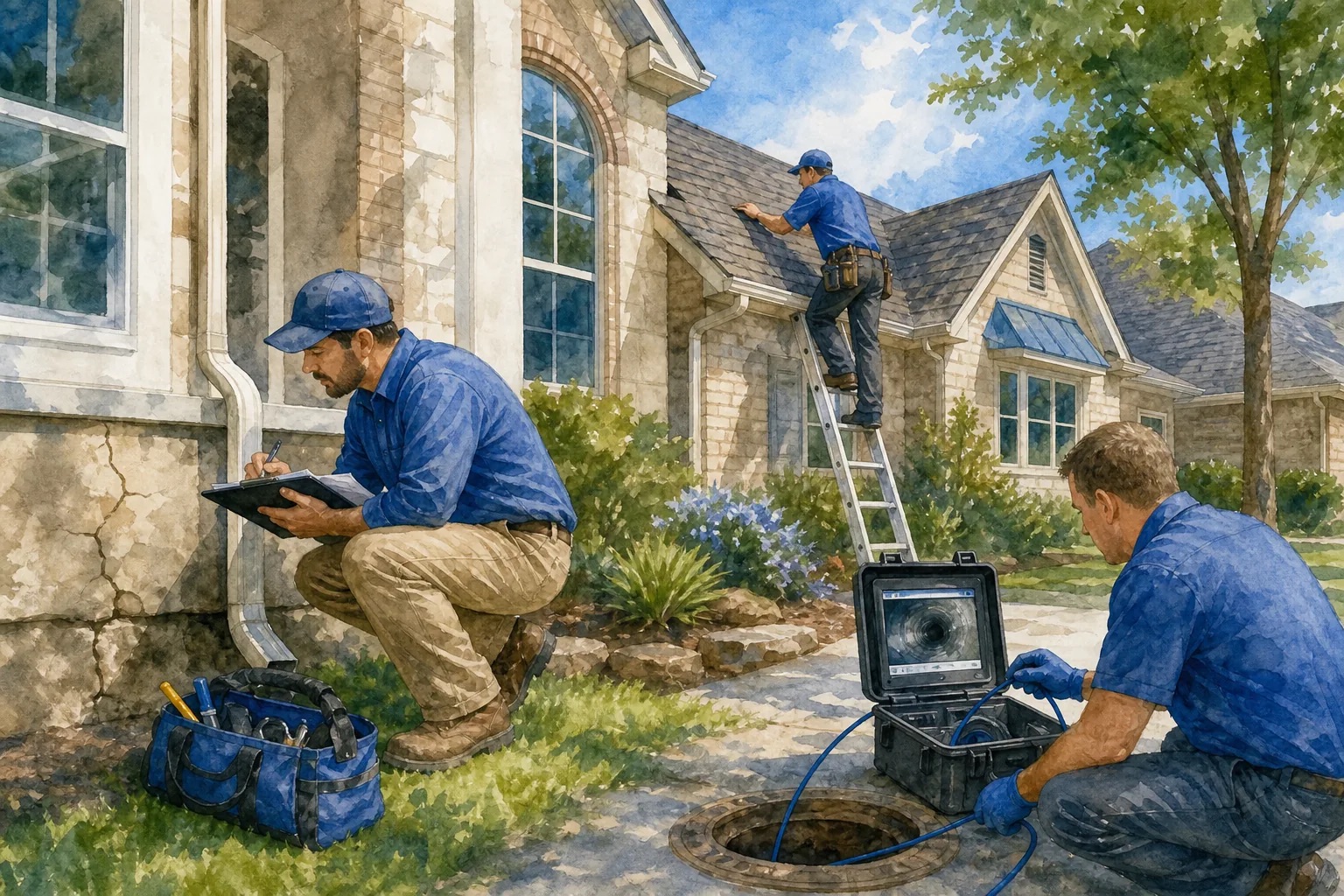
A general inspector can identify a concern, but sometimes we need another professional to take a closer look.
If there are foundation concerns, I may recommend having a foundation professional evaluate it. Roof concerns may need a roofer, electrical issues may need a licensed electrician, and plumbing concerns may need a plumber.
I also recommend a sewer scope as part of the inspection process. It gives us information about the sewer line that isn't included in a standard general home inspection.
The goal is to get enough information to understand what we're dealing with before you make a decision. Sometimes an additional evaluation confirms there's a significant problem. Other times, something that looked pretty scary on the inspection report turns out to be much less concerning.
If we need another professional to take a closer look, we'll get that scheduled as quickly as possible. I'll keep our option deadline in mind so we have time to get the information we need before you have to make a decision.
My experience over more than 20 years has taught me one useful rule: pay for more information when it can change the decision. We don't need to order every possible test just because something appears on the report. We focus on the findings that affect safety, cost, insurability, financing, or your willingness to own the home.
Step 4: Choose Between Repairs, Credits, a Price Reduction, or Walking Away
Once we understand what the major problems actually are, we'll talk through your options.
And this is where every buyer can be different. Something that may be a deal breaker for one buyer may not bother another buyer at all. There isn't one right response to an inspection report.
Depending on the property, the findings and what you're comfortable with, we may ask the seller to make repairs, request a credit or price reduction, accept the home as-is, or decide it's time to walk away.
Ask the Seller to Make Repairs
We may ask the seller to make specific repairs before closing. If they agree, the repairs should be clearly spelled out in a written amendment, including licensed professionals when appropriate.
We also want documentation that the agreed-upon work was completed, such as receipts, invoices, permits when required, or other appropriate documentation. We'll also want an opportunity to verify the repairs before closing.
The seller may agree to everything we request, agree to some of it, propose something different, or say no.
A repair request is a negotiation, not an order.
Request a Closing Credit
Sometimes it makes more sense to ask the seller for a credit rather than asking them to complete a repair.
A credit can help with allowable closing costs and may give you more control over handling the repair after closing. But credits are subject to your loan and lender requirements, so I'll coordinate with your lender before we negotiate one.
Negotiate a Lower Purchase Price
A price reduction is another possibility, but it's important to remember that reducing the purchase price doesn't necessarily put money in your pocket to make repairs after closing.
Whether a price reduction makes sense depends on the situation and your financing. We'll talk through what it actually accomplishes before deciding whether that's the direction you want to go.
Accept the Home As-Is
You may decide you're comfortable accepting the property as-is.
Maybe the problems are manageable. Maybe you've already planned for certain updates or repairs. Or maybe the findings simply don't bother you enough to renegotiate the deal.
That's your decision. Different buyers have different comfort levels.
Decide It's Time to Walk Away
And sometimes, after getting all the information, you may decide this simply isn't the house for you.
If you're still within your option period and have the right to terminate under your contract, walking away may be one of your options.
The goal isn't to make a house work at all costs. It's to understand what you're buying, what you're comfortable taking on, and make the decision that makes sense for you.
FAQ: Major Home Inspection Problems
What happens if my home inspection finds major problems?
If your home inspection finds major problems, you can review the findings, seek specialist advice, negotiate with the seller, accept the home as-is, or terminate if your contract permits it. The inspection does not force the seller to repair the home. Your available rights depend on the signed Texas contract and its deadlines.
Is the seller required to fix problems found by the inspector in Texas?
No, a Texas seller is usually not required to fix every item in a private resale home. Many Texas resale contracts use an as-is structure. The seller may agree to repairs, a credit, or a price change, but both sides must negotiate and document the agreement before the relevant deadline.
Can I walk away if the inspection finds major problems?
You may be able to walk away if your contract gives you an active termination right and you deliver notice correctly and on time.
Should I ask for repairs or a credit after an inspection?
A credit may suit you when you want to choose the contractor and manage the work after closing. Seller repairs may suit a clear task that must be finished before closing. Your lender must approve the credit structure. Compare the timing, quality control, cash needed, and risk for each option.
What inspection problems should I negotiate?
There isn't one answer that's right for every buyer. I generally want to pay the closest attention to foundation, plumbing, HVAC, roof and electrical issues, along with safety concerns, active damage, and anything that may affect insurance or financing.
But your comfort level matters too. Something that's a big concern for one buyer may not bother another. We'll look at the findings, get more information when we need it, and decide what matters to you.
Conclusion
A home inspection report can look overwhelming, especially when it comes back with pages of findings. But the number of pages isn't what matters.
We'll look at what the inspector found, figure out what needs more information, and focus on the things that actually matter to you. Sometimes that means bringing in another professional. Sometimes it means negotiating with the seller through the listing agent. And sometimes you may decide you're comfortable moving forward exactly as things are.
There's no perfect house, and there's no one-size-fits-all answer to an inspection report.
My job is to help you understand what we know, get more information when we need it, and walk you through your options so you can decide what you're comfortable with.
If you're buying a home in Dallas-Fort Worth and want someone in your corner throughout the process, contact Tommye McCeig. Let's make sure you understand what you're buying before you call it home.
Categories
Recent Posts